Toilet internals and seals
Fill valves, flappers, flush valves, tank bolts and the wax seal at the base. Water appearing at the floor after a flush is a different problem from a tank that will not stop filling, and they are checked separately.
Fixtures that run, drip or will not shut off waste a surprising amount of water and occasionally hide something worse. An independent plumber can repair or replace the fixture and check the valves feeding it.
Hard water shortens the life of the parts inside these fixtures. Mineral deposits build up on flapper seats, cartridges and aerators, which is why a toilet that ran fine for years starts cycling on its own and a faucet begins to drip.
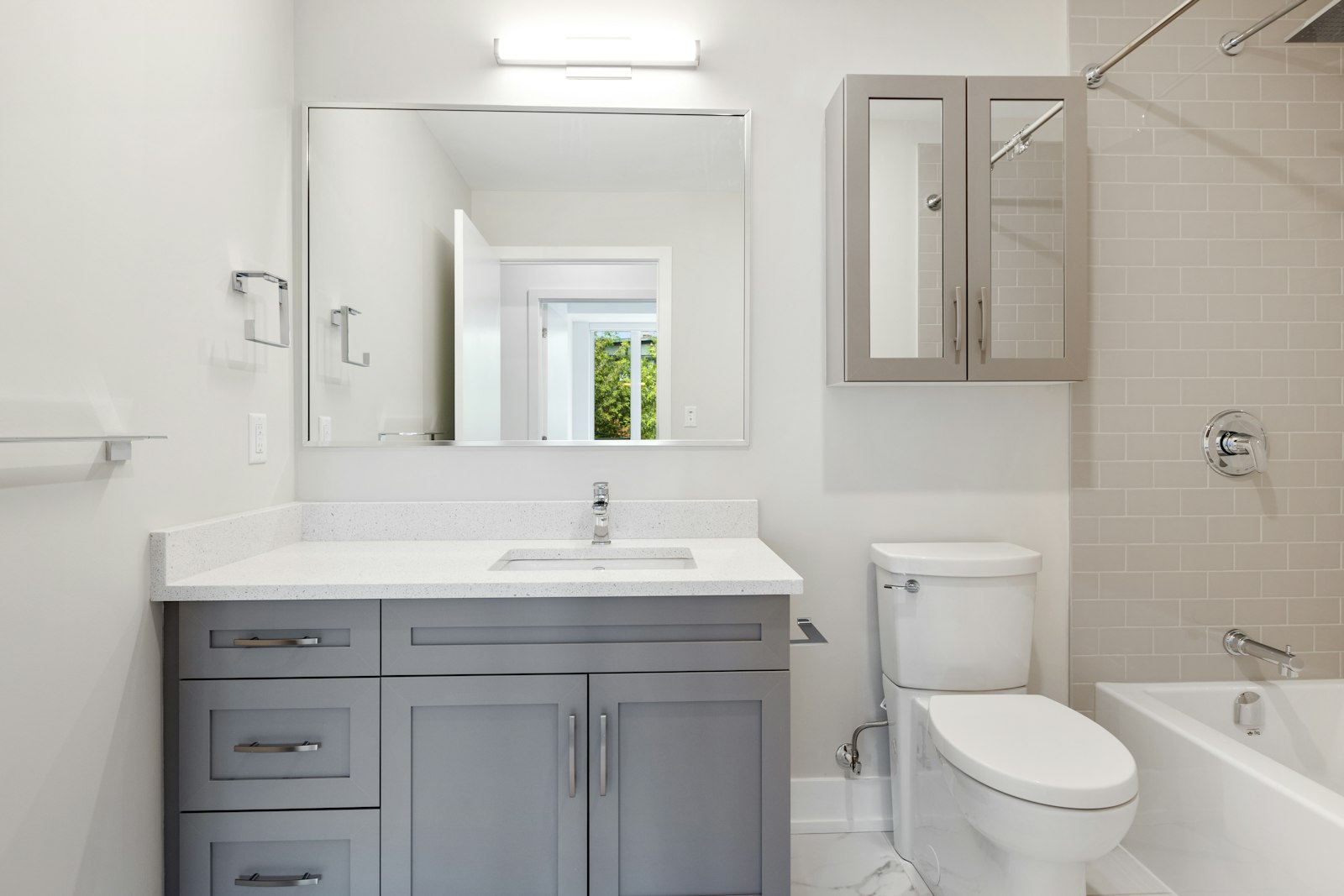
These are small jobs, but they are worth doing properly. Ask the plumber to repair what can be repaired and say when a fixture is past it.
Fill valves, flappers, flush valves, tank bolts and the wax seal at the base. Water appearing at the floor after a flush is a different problem from a tank that will not stop filling, and they are checked separately.
Kitchen, bathroom and tub faucets, including cartridges, seats and aerators clogged with scale. Where parts for an older fixture are no longer available, ask the plumber to say so before charging for a repair attempt.
The angle stops and braided supply lines behind every fixture age quietly and are a common source of sudden leaks. If one is seized or weeping, replacing it during the same visit saves a later call.
Most running toilets and dripping faucets are repairable with the right parts. Replacement makes more sense when the fixture is badly scaled inside, when parts for the model are no longer sold, or when the same repair has already been done once and has not held.
Water at the base of a toilet deserves attention rather than a towel. It usually means the seal under the fixture has failed, and left alone it can damage the subfloor or, in a slab home, quietly soak the flooring around it.
If the water appears somewhere no fixture can explain it, see leak detection. A toilet that backs up along with other drains points to sewer line repair rather than the fixture, and a slow single drain belongs with drain cleaning. You can also see how calling works or browse the full service list.
Whether the fix is a part inside the fixture or a replacement, and whether the valve and supply line behind it also need attention. Ask the independent plumber to look first and give you the price before removing anything.
Usually, yes. A toilet that refills on its own runs continuously in the background and shows up on the bill, and the cause is often a worn flapper or fill valve that takes very little time to put right.
Most toilets and sinks have a small valve on the wall or under the cabinet that isolates them. If it turns freely, close it and the rest of the house keeps its water. If it is seized, do not force it; shut off at the meter instead.
Call and describe the problem to be connected with an independent plumber.